

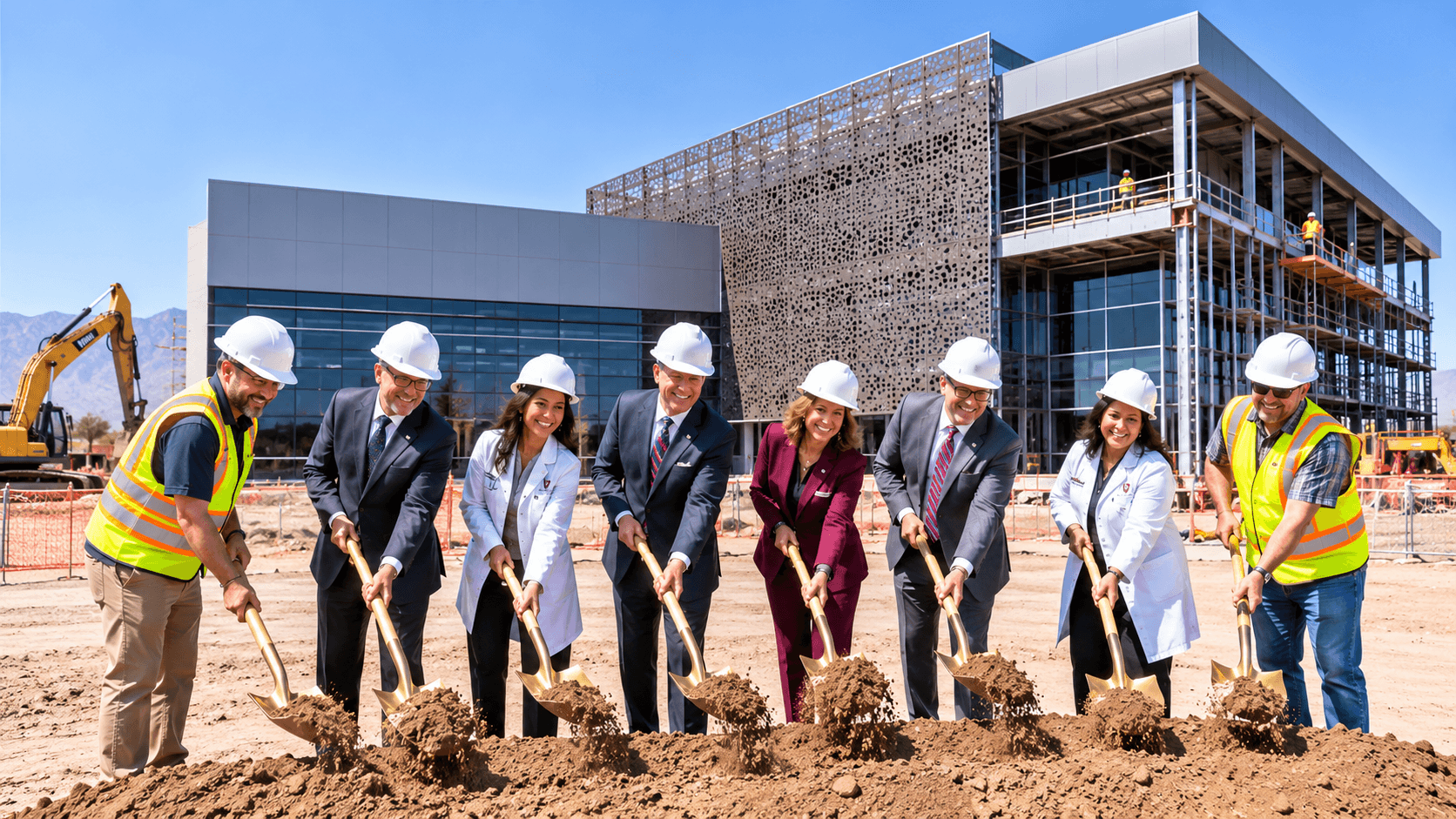
A training hospital without patients is taking shape in Summerlin. Roseman University of Health Sciences broke ground November 20 on a three-story Medical Simulation Building where future doctors, nurses, and pharmacists will practice real-world care together. The project is the first step in a much larger campus expansion, but the building itself won't be ready until 2028.
Here's what will be built near the 215 Beltway, why the university is investing in simulated care and which milestones neighbors should watch next.
At a Glance
A $70 Million Building, Not a $500 Million Building
The Medical Simulation Building is expected to cost about $70 million. The frequently cited $500 million is the broader multi-phase expansion budget, not the price of this one building.
About 200 people attended the groundbreaking ceremony. The new facility will stand along Discovery Drive, joining the existing Discovery, Breakthrough and Innovation buildings on Roseman's Summerlin campus. The November 20 groundbreaking marks the start of work toward the university's spring 2028 completion target.
That timeline matters. Groundbreaking means construction is beginning; it does not mean the simulated hospital is open for students or patients. This is an educational facility rather than a new public hospital or urgent-care clinic.
What Will Be Inside the Simulation Building?
The plans go far beyond a typical classroom. Students will train in spaces designed to resemble the settings where healthcare workers make difficult decisions. The planned building will contain:
The facility's plans were previewed earlier in 2026. The November groundbreaking marks the shift from the announced concept toward construction.
|
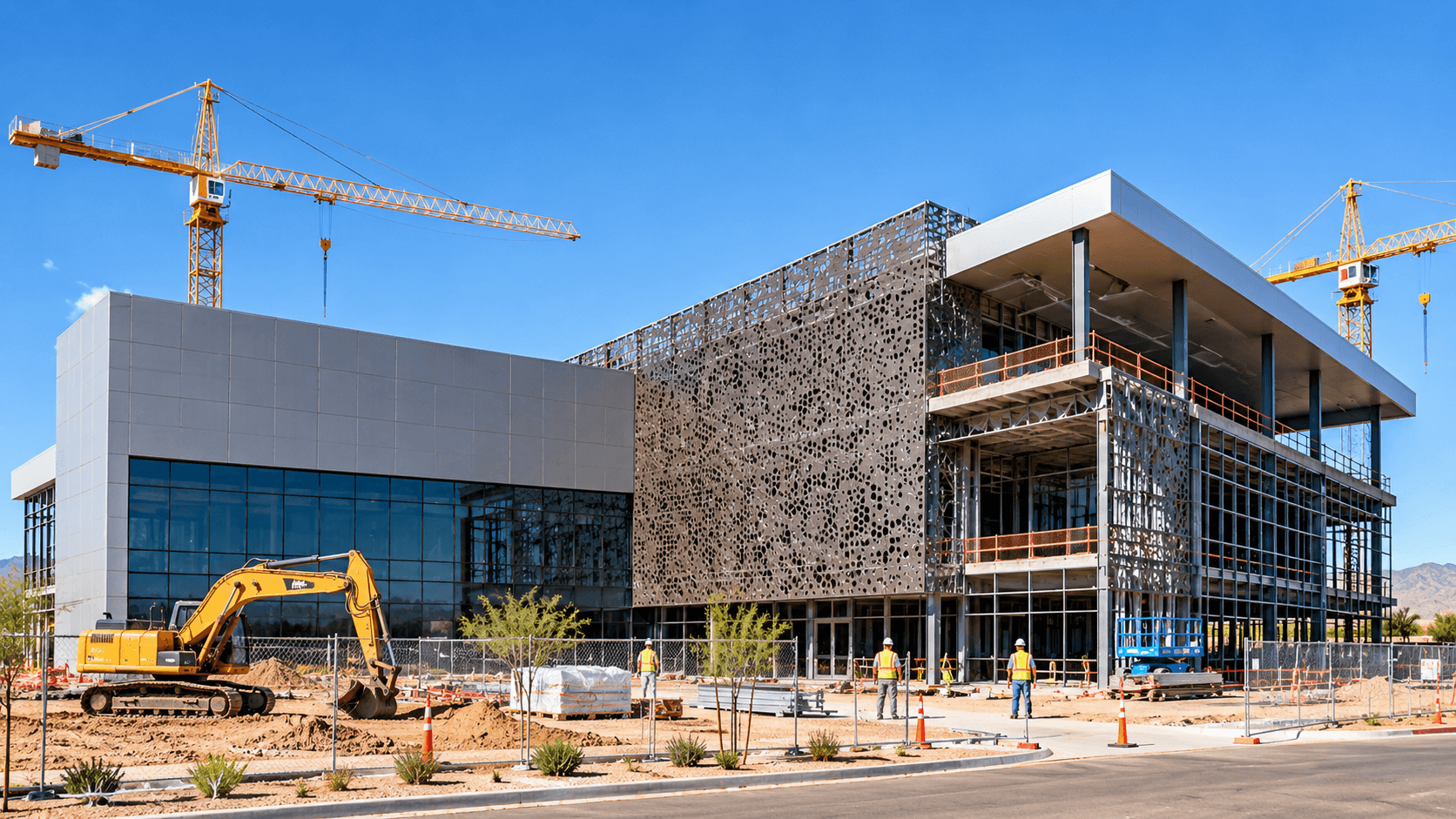 AI generated photo for West Valley Shoutouts. |
Why Roseman Wants Students to Train Together
In a real hospital, physicians, nurses, and pharmacists rarely work in isolation. Medication decisions, emergency responses, and discharge plans depend on people with different specialties communicating clearly. Roseman's new building is intended to put those students in shared simulations before they enter actual care settings.
For example, a training exercise could have nursing students monitor a simulated patient, medical students make treatment decisions and pharmacy students review medication questions. Faculty can observe the exercise and discuss what worked.
Roseman president and co-founder Renee Coffman has framed the project as an investment in the region's future healthcare workforce. The university's goal is to give students a realistic place to learn together while reducing the stakes of their earliest high-pressure practice.
Why This Matters to Summerlin Residents
The immediate change for neighbors is physical: another substantial education building is planned along Discovery Drive. Longer term, the university hopes a larger training campus will help Southern Nevada develop more homegrown healthcare professionals.
That is an important distinction. More training capacity does not automatically mean more doctors available for appointments next year. Students still need to graduate, complete any required postgraduate training, and decide where to practice. The proposed campus is a long-term workforce investment, not a short-term fix for local appointment wait times.
Roseman's broader campus strategy brings medicine, nursing and pharmacy education closer together. Its College of Medicine welcomed its first MD class in 2025, another step in building that pipeline.
The design also includes classrooms, collaboration areas, faculty offices, and a rooftop garden and event space overlooking a planned campus quad. Those are features of the proposed building, not amenities currently open to the neighborhood.
|
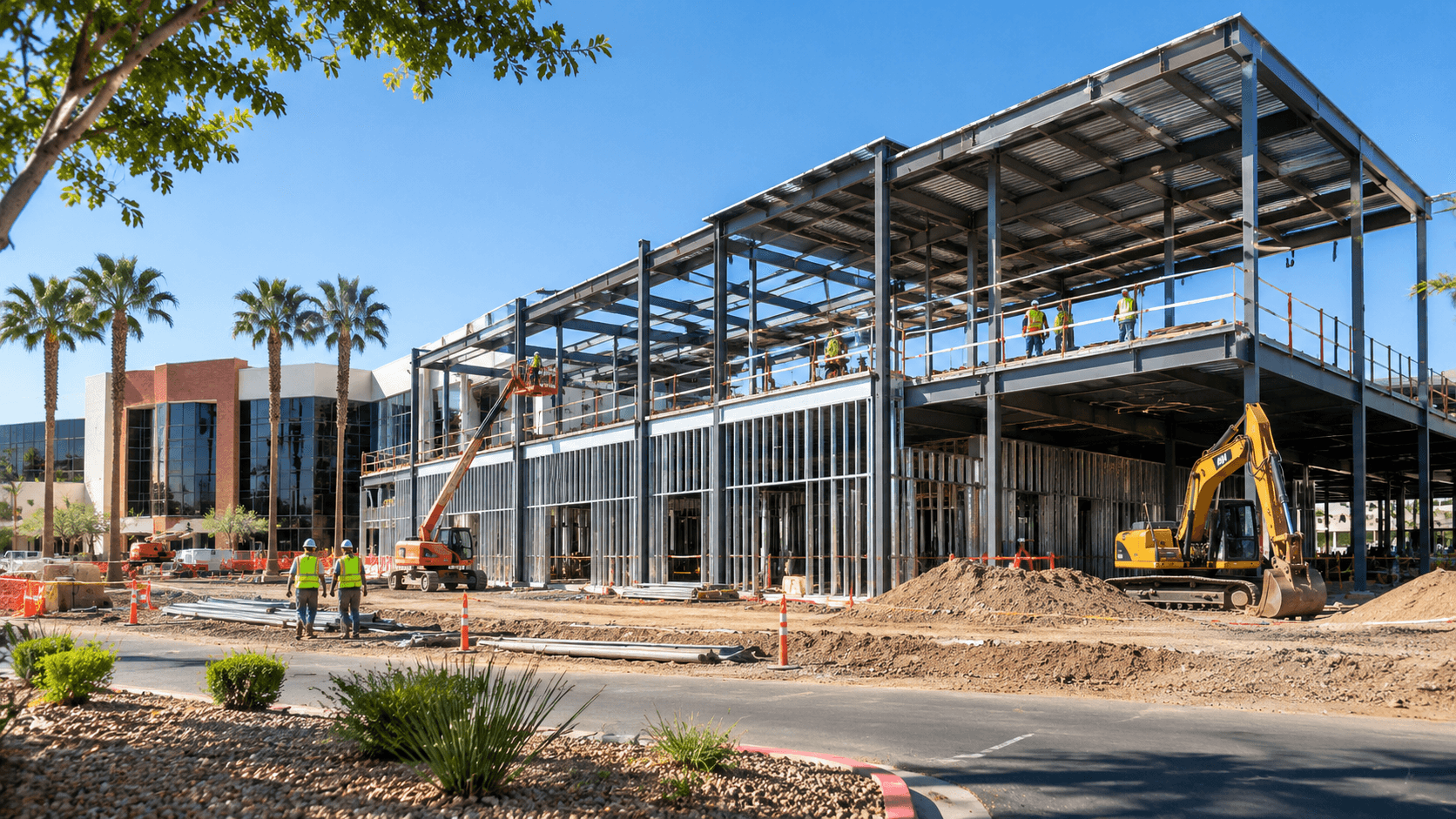 AI generated photo for West Valley Shoutouts. |
What Comes Next on Discovery Drive
The most concrete milestone is the university's spring 2028 completion target for the simulation building. Construction schedules can change, so residents should treat it as a goal rather than a guaranteed opening day.
Roseman also added classrooms and study spaces to Innovation Hall during the 2025- 26 academic year and expects work on another classroom in the Discovery Building to begin in January 2027.
Beyond that, the university's long-range campus plan calls for further academic space and other facilities.
Three Things Neighbors Can Check
For nearby residents, the practical questions are straightforward: Will construction affect access to campus buildings? When will the new teaching spaces be usable? And how will future phases change the neighborhood? Answers should come from project updates rather than estimates based on the rendering alone.
|
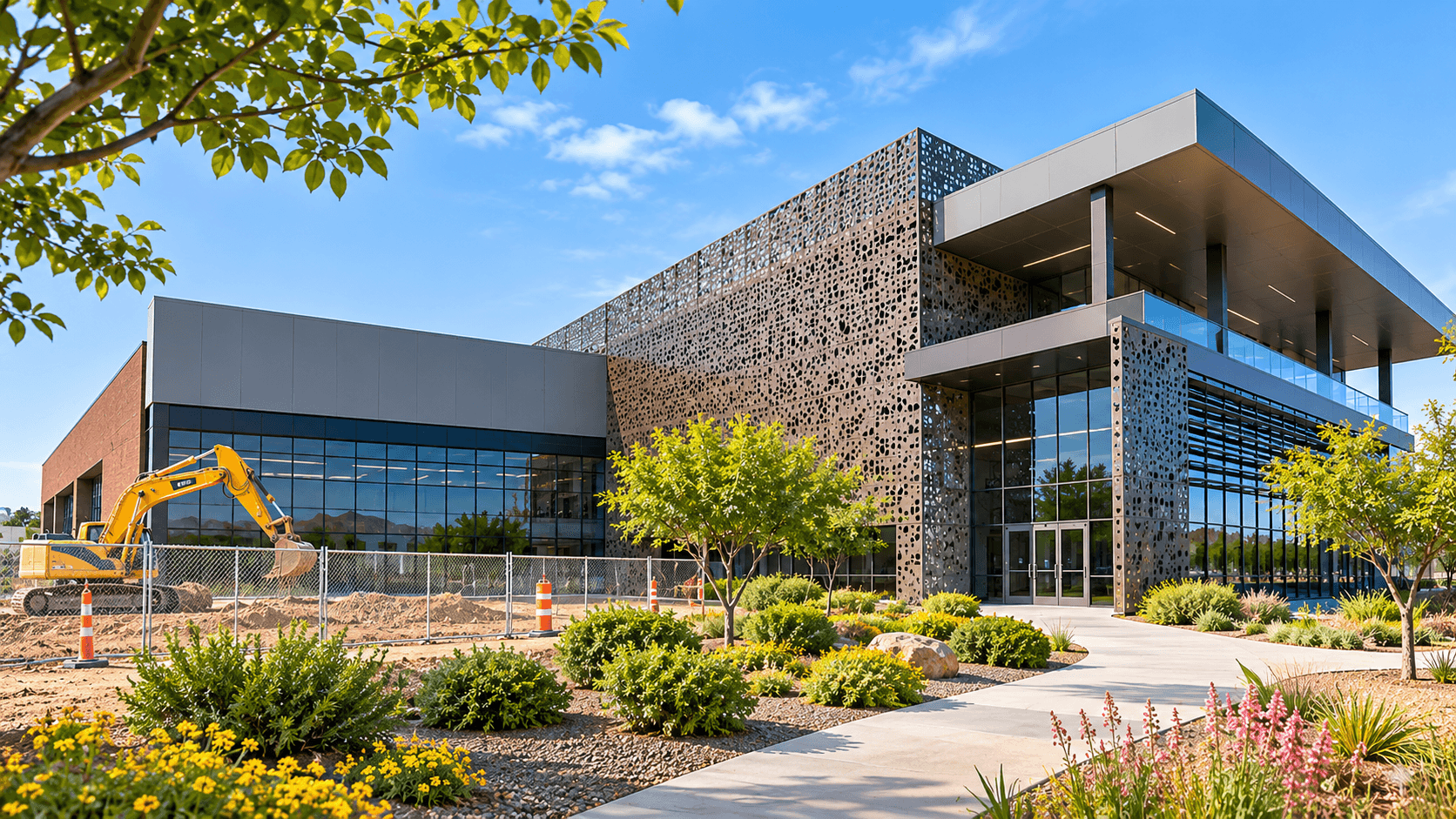 AI generated photo for West Valley Shoutouts. |
The Bottom Line
Roseman's Summerlin expansion has reached a visible milestone. The university broke ground on an approximately $70 million, 84,290-square-foot medical simulation building designed to train future physicians, nurses and pharmacists side by side.
The larger $500 million campus vision remains a multi-phase plan. For now, the date to watch is spring 2028, when the first new building is expected to be completed. Residents can follow Roseman's campus updates as the new training facility takes shape. |


2 Comments
Join the conversation
Love that the nursing, medical, and pharmacy students will get to practice together. The simulated home sounds especially useful for learning what care looks like outside a hospital.
Maria G.The simulated home stood out to me too. Practicing together in that setting seems especially useful for planning what happens after someone goes home.