

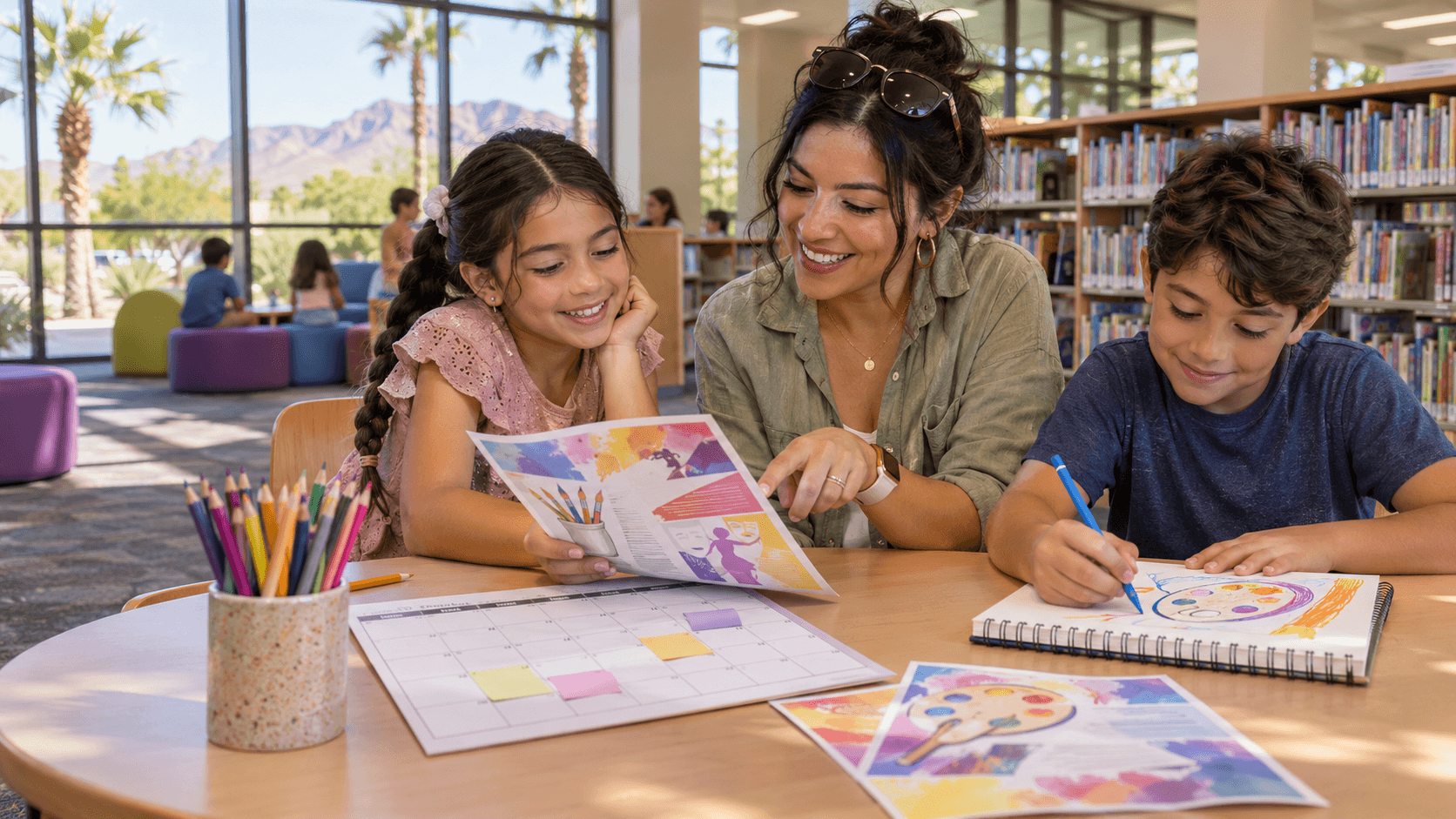
For a Summerlin family choosing a school, arts opportunities are not an extra—they can shape where a student finds confidence, community and a reason to stay engaged. A recent Summerlin overview points to visual art, music, theater, dance, film and digital-media pathways across several local schools.
The useful question is not whether every program looks good on paper. It is which arts setting fits a particular student, and what a family can verify before applying, enrolling or planning around it.
Start with the Summerlin schools arts overview, then confirm offerings directly with the school because classes, auditions, transportation and enrollment requirements can change.
At a Glance
|
 AI generated photo for West Valley Shoutouts. |
The resident takeaway
Summerlin’s arts story is strongest when families use it as an invitation to investigate, not a substitute for verification. The programs named in the community overview show that students can encounter many forms of creative work close to home.
For a parent, the next step is practical: identify the student’s interests, contact the relevant school and confirm what is available now. For neighbors, supporting performances, exhibitions and student work can help keep those opportunities visible.
Creative opportunity becomes meaningful when a student can actually access it, participate in it and see a path forward. Use the original Summerlin overview as a starting point, then follow the current details from the school itself.
How community support shows upFamilies do not need to be arts specialists to support student creativity. Attending a school performance, asking a student about a project or sharing a verified event notice can make participation feel visible. Use the Summerlin events calendar and the community news page to find confirmed public opportunities. Local arts thrive when young people can see that their work has an audience beyond the classroom. |
 AI generated photo for West Valley Shoutouts. |
A practical family checklist
Parents weighing school options can also review the Summerlin news archive for community context, but a school’s own staff should answer enrollment and program questions. A polished brochure cannot replace a current conversation about the student’s actual choices.
The broader Summerlin setting adds another layer. Local public art, the community events calendar and school performances can give students places to see creative work outside their own campus. |
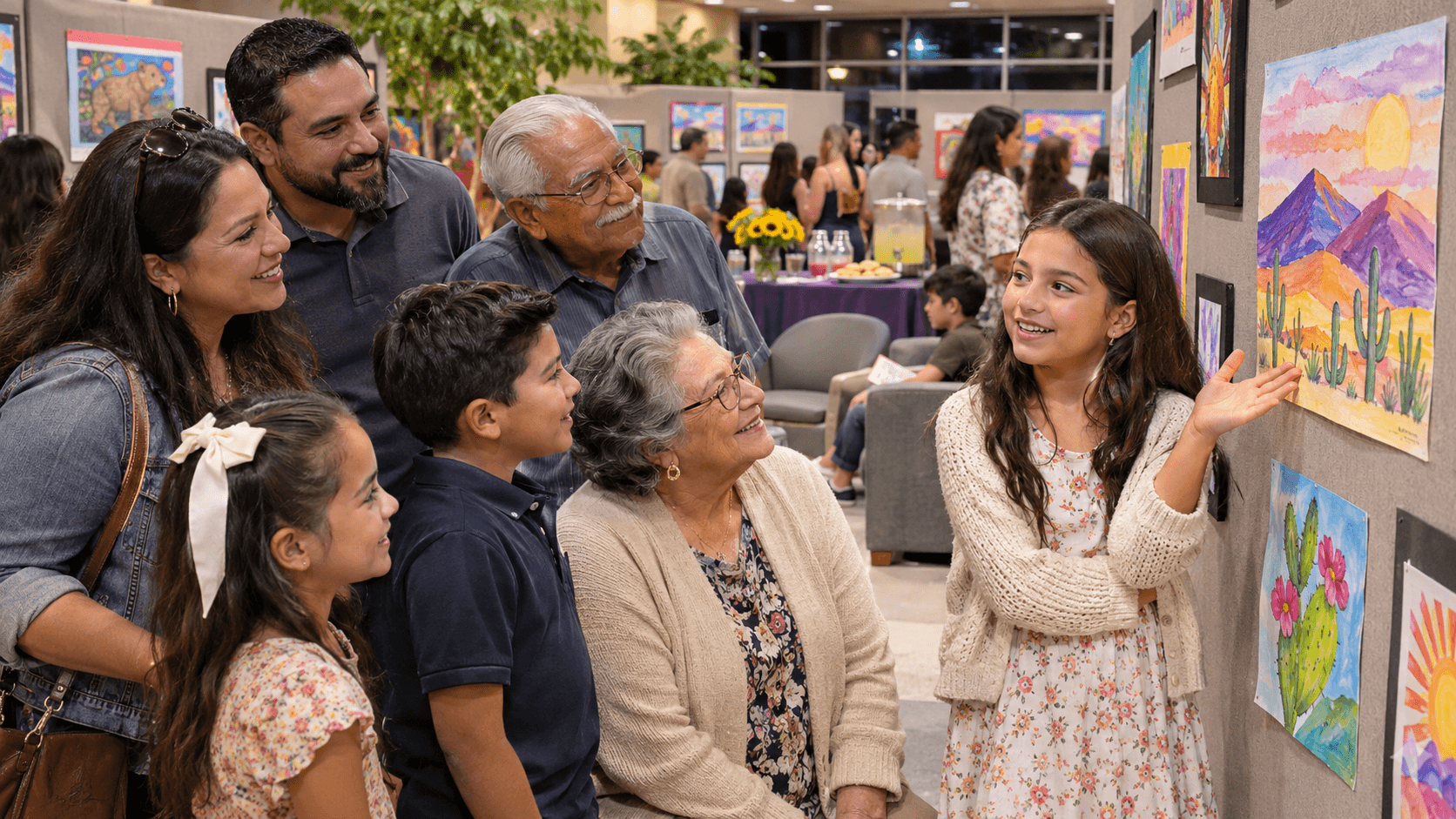 AI generated photo for West Valley Shoutouts. |
The resident takeaway
Summerlin’s arts story is strongest when families use it as an invitation to investigate, not a substitute for verification. The programs named in the community overview show that students can encounter many forms of creative work close to home.
For a parent, the next step is practical: identify the student’s interests, contact the relevant school and confirm what is available now. For neighbors, supporting performances, exhibitions and student work can help keep those opportunities visible.
Creative opportunity becomes meaningful when a student can actually access it, participate in it and see a path forward. Use the original Summerlin overview as a starting point, then follow the current details from the school itself.
How community support shows upFamilies do not need to be arts specialists to support student creativity. Attending a school performance, asking a student about a project or sharing a verified event notice can make participation feel visible. Use the Summerlin events calendar and the community news page to find confirmed public opportunities. Local arts thrive when young people can see that their work has an audience beyond the classroom. |
AI generated photo for West Valley Shoutouts. |




7 Comments
Join the conversation
My daughter found her people in choir, so I get why this matters. Having a place to belong can make a big difference at school.
Does anyone know if Palo Verde has auditions for its music programs? That is one detail I would want before making school plans.
That’s an important detail to check before making plans. We couldn’t confirm Palo Verde’s current audition requirements, so we recommend contacting the school’s music department directly.
I would check the costs before getting too excited about any program. A great arts class only works if the family can afford it.
Dave ThompsonAgreed. I’d ask about supplies and performance fees too. Those costs can add up even if the class itself is affordable.
Love seeing theater and music alongside film and digital media. Kids have different ways of being creative, so it helps to have choices.
Maria G.Exactly. My son never wanted to be onstage, but he loves editing videos. It’s nice to see room for both.